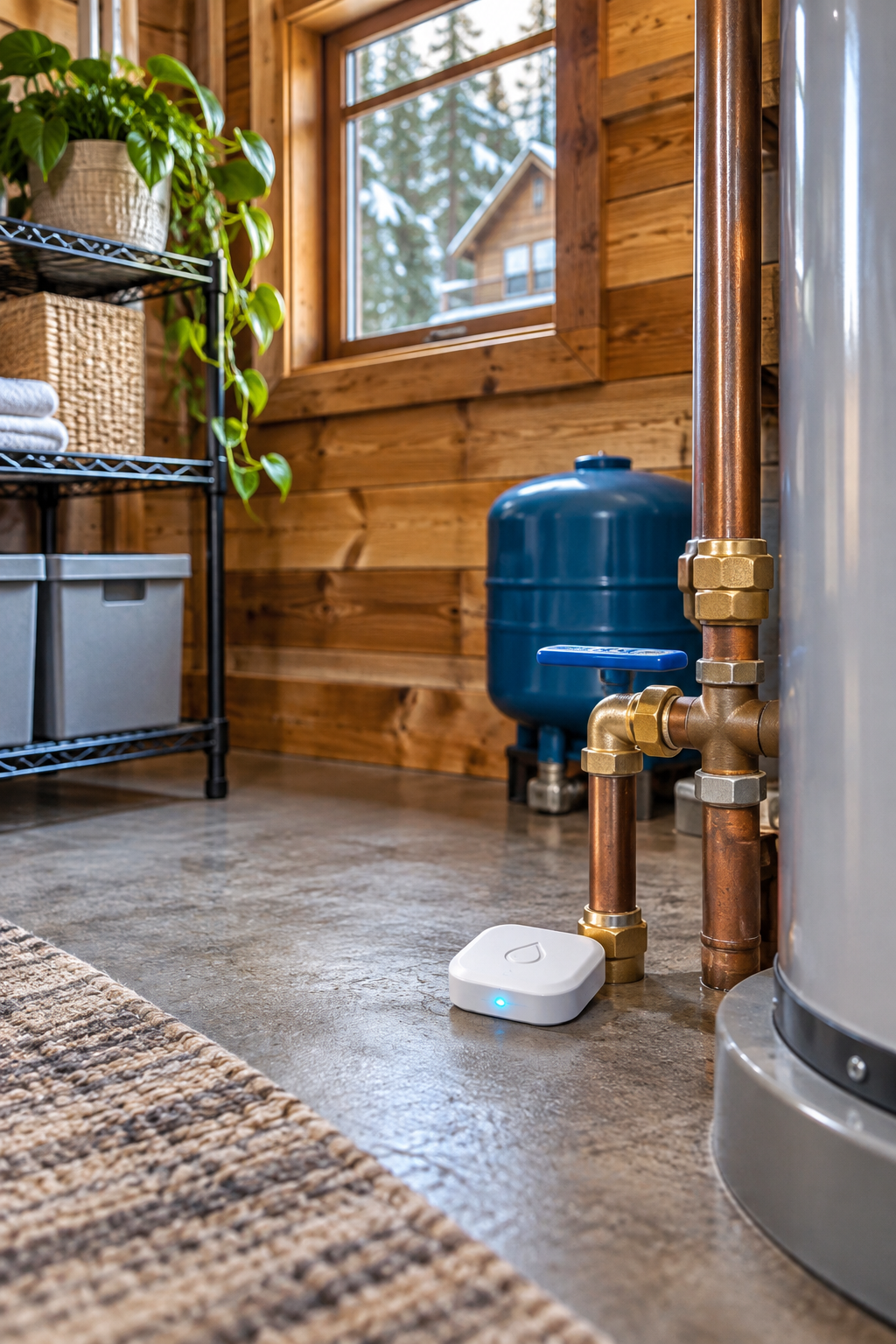
Where to place water leak sensors, what to check about alerts, and why remote notifications need a response plan.
What leak sensors can and cannot do
Many basic leak detectors trigger when water bridges contacts on the sensor. Some use a cable probe to cover a wider area. These devices may detect water at the sensor but cannot guarantee that every leak will reach it. A standalone alarm may sound locally without notifying anyone remotely.
Where to place sensors
Consider under sinks, near washing machines, behind refrigerators with water lines, near water heaters, by sump pumps, and in mechanical rooms. Placement should follow the manufacturer’s instructions and the actual drainage path; an elevated sensor may miss water collecting on the floor.
Choose alerts for an unoccupied property
For a vacant property, remote notifications are often more valuable than a local siren alone. Check whether alerts depend on Wi-Fi, a hub, a cloud service, or a cellular connection. Ask what happens when power or internet service fails and whether a second person can receive notifications.
Consider automatic shutoff carefully
Some systems integrate with an automatic water shutoff valve. Compatibility, installation requirements, plumbing layout, and false-trigger behavior vary. A licensed plumber may be needed. Automatic shutoff does not eliminate the need for maintenance or inspection.
Test and maintain
Test each sensor using the manufacturer’s recommended procedure, check battery alerts, and confirm that remote notifications reach the intended phone. Replace batteries as required and review sensor positions after appliance or plumbing changes.
Pair detection with prevention
For seasonal properties, consider insulating exposed pipes, maintaining adequate heat, checking plumbing connections, and arranging periodic inspections. A sensor is one layer of protection, not a substitute for preventive maintenance.
Bottom line
Start by identifying the most likely leak locations, then choose sensors that can notify someone able to act. Coverage, reliable communication, and a response plan matter more than the number of app features.
Research note: Product capabilities and plan terms change. Verify current manufacturer documentation before buying.
Leak sensor placement checklist
| Location | What to watch | Placement consideration |
|---|---|---|
| Under sinks | Supply lines and drain connections | Put contacts where dripping water collects |
| Water heater | Tank and nearby plumbing | Avoid heat or locations prohibited by device instructions |
| Washing machine | Hoses and drain | Keep the sensor accessible for testing |
| Refrigerator water line | Hidden connection leaks | Check floor slope and appliance clearance |
| Sump or mechanical room | Overflow or equipment leaks | Use a sensor rated for the conditions |
For vacant homes, check whether notifications survive an internet interruption. Our power outage alert guide explains the connection and backup-power trade-offs.
Continue reading
Where remote alerts fit into prevention
Place sensors at likely leak sources, but remember they only detect water where it reaches the sensing contacts. A remote alert should complement periodic inspections, plumbing maintenance, and winterization where appropriate. For high-risk properties, investigate whether an automatic water shutoff system is practical.
A leak sensor helps detect water after it appears; our freeze alarm guide for vacant cabins covers an additional early-warning layer for cold weather.
If freezing pipes are part of your water-damage risk, our cabin temperature sensor placement guide explains where low-temperature readings can be most informative. Leak and temperature sensors detect different problems, so consider both layers.
Comparing equipment for an unattended property? Our water leak detector buying guide for vacant homes explains spot sensors, flow monitoring, shutoff systems, and connectivity trade-offs.