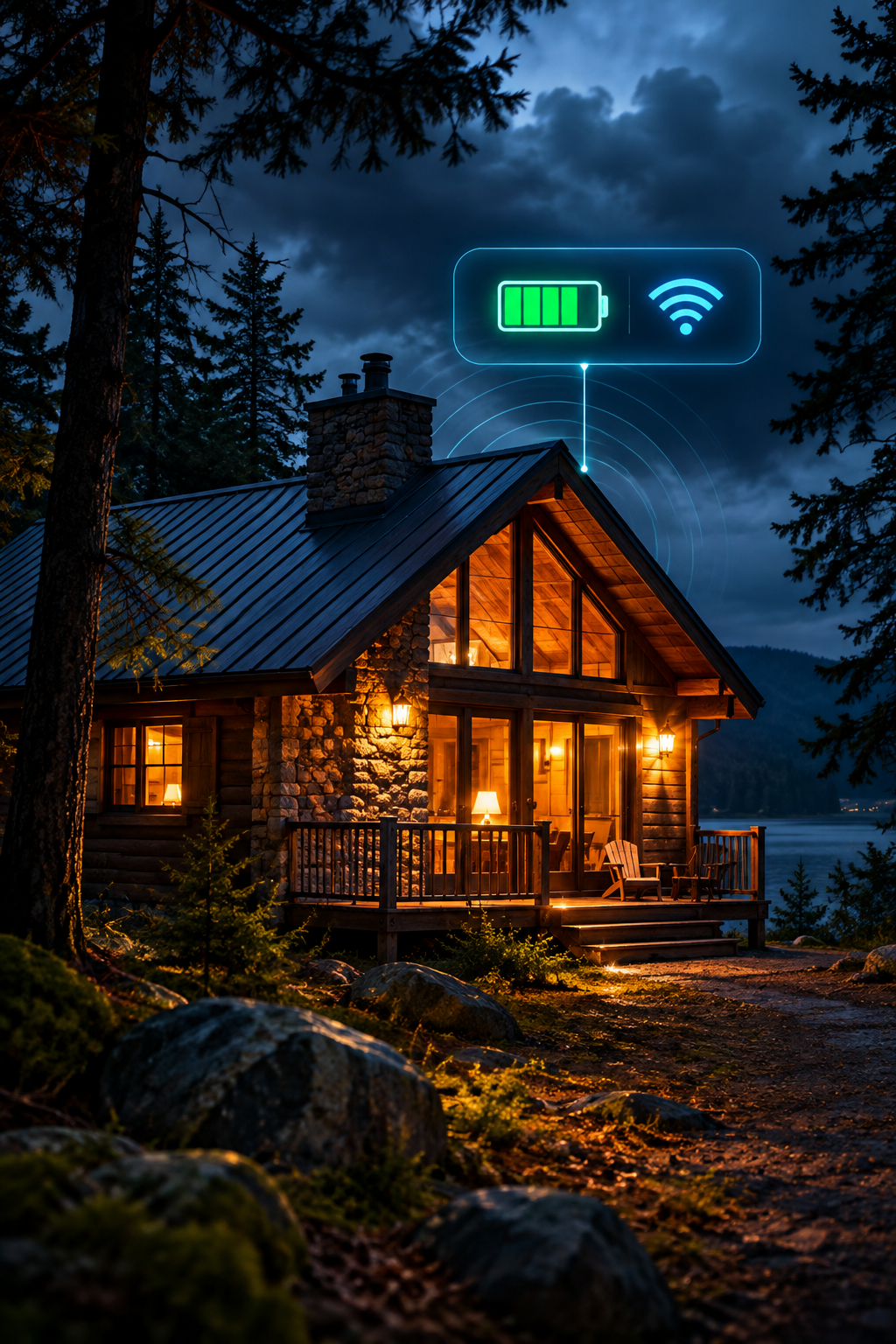
Learn practical ways to monitor temperature, leaks, and power at a cabin that does not have a permanent Wi-Fi connection.
Start with the risks, not the gadgets
For a seasonal cabin, the most consequential risks may be frozen pipes, loss of heat, water leaks, or extended power failures. Make a short list of what you need to know remotely and who can act on an alert. A notification is useful only if someone can respond.
Option 1: A cellular monitoring device
A purpose-built cellular temperature or environmental monitor can send readings and alerts without a conventional Wi-Fi router. Before buying, check the exact network coverage at the cabin, subscription pricing, power requirements, and whether the device supports low-temperature, humidity, or power-failure alerts.
Option 2: A cellular hotspot and Wi-Fi sensors
A cellular hotspot or router can create local Wi-Fi for compatible sensors. This offers flexibility, but introduces more equipment, a data plan, and another point of failure. Consider how the hotspot, router, and sensors will remain powered during an outage.
Option 3: Local alarms plus a nearby contact
Where cellular service is unavailable, a local audible alarm and a trusted neighbor or property manager may be more practical than a remote notification system. Some systems can store measurements locally, but stored data does not provide real-time warning while disconnected.
Check the site before installation
Test cellular reception inside the cabin and at the intended mounting position. Confirm the sensor’s operating temperature range and avoid placing it next to a heater, direct sunlight, or a draft that could distort readings. Follow the manufacturer’s mounting instructions.
Design an alert response plan
Set sensible thresholds for freezing or overheating, add a second recipient where supported, and test notifications. Decide who will inspect the property, where shutoff valves are located, and what to do if the cabin is inaccessible. Never rely solely on one device for safety-critical protection.
Budget for the full year
Include device purchase price, service plan, batteries, cellular data if using a hotspot, and occasional onsite maintenance. A less expensive device can cost more over several years if its connectivity requirements are substantial.
Bottom line
For a cabin without Wi-Fi, a cellular monitor is often the simplest starting point when coverage is reliable. If coverage is weak, prioritize local safeguards and an in-person response arrangement before investing in connected devices.
Editorial note: Device features, network support, and pricing vary by model and can change. Verify specifications with the manufacturer before purchasing.
Which setup fits your cabin?
| Property situation | Practical starting point | Main limitation |
|---|---|---|
| No Wi-Fi, usable cellular signal | Dedicated cellular monitor | Carrier coverage and recurring service |
| Several smart devices needed | Cellular router with compatible Wi-Fi sensors | More equipment and backup-power needs |
| No reliable cellular service | Local alarm plus a nearby responder | No dependable remote notification |
| Existing reliable Wi-Fi | Wi-Fi sensor with tested alerts | Router or internet outages can interrupt alerts |
For more detail on the connectivity trade-offs, see our cellular versus Wi-Fi temperature monitor comparison. If you’re ready to compare specifications, use the remote temperature monitor buying guide.
Continue reading
A simple installation checklist
Before leaving the cabin unattended, trigger a test alert, confirm that the intended contacts receive it, and verify how long the sensor operates without mains power. Record the device location, service renewal date, and a local responder’s contact details. Repeat the test after changing routers, batteries, or cellular service.
For cold-weather protection, our cabin freeze alarm guide explains Wi-Fi and cellular options, low-temperature alerts, and how to test them.
Ready to compare equipment? Our cellular temperature monitor buying guide for cabins covers coverage, recurring fees, and outage limitations. Then check where to position sensors for useful freeze warnings.
For visual monitoring of doors and driveways, see our security camera guide for remote cabins, including cellular and solar-powered setups.
Also monitoring for water leaks? Our guide to leak detectors for vacant homes compares Wi-Fi and cellular alert requirements alongside sensor and shutoff options.