Ventrilio

SMARTER PROPERTY LIVING

Category: Connectivity & Remote Monitoring

Monitoring properties without Wi-Fi, including cellular connectivity and remote access.

  • Best Security Cameras for Remote Cabins and Vacation Homes: Wi-Fi, Cellular & Solar Options

    Best Security Cameras for Remote Cabins and Vacation Homes: Wi-Fi, Cellular & Solar Options

    Choosing security cameras for a remote cabin or vacation home requires more than comparing video resolution. Internet availability, winter temperatures, power outages, and the distance to a trusted local contact can determine whether a system is actually useful. This guide compares common camera setups and explains how to choose equipment for a property you do not visit every day.

    Fast buyer’s checklist: choose the right cabin camera

    Internet and power available: start with Wi-Fi or wired camera options. No cabin broadband but good mobile reception: investigate purpose-built cellular cameras and their data plans. No outlet at the mounting point: compare battery-and-solar designs, checking winter charging limits and whether recording is event-based. Need continuous recording: verify power, storage, and network requirements for the specific model. Before buying, confirm the total first-year cost, including storage subscriptions, data, mounts, and backup power.

    For properties without permanent internet, read how to monitor a cabin without Wi-Fi. For outages that could interrupt cameras or routers, see our power outage alerts guide.

    Quick verdict: which camera setup fits your property?

    For a cabin with reliable broadband and electricity, a Wi-Fi camera can be a straightforward starting point. For a property without broadband, investigate a camera designed for cellular connectivity and confirm its carrier, data plan, and signal requirements. Where power is limited, a battery-and-solar design may reduce charging visits, but solar performance depends on sun exposure, weather, and recording activity. If you need continuous recording, confirm the exact model supports it with your power and storage setup.

    Compare camera types before choosing a brand

    The best camera is the one that can stay connected, capture useful footage, and notify someone who can respond. These four setup types solve different problems.

    SetupBest suited forMain limitation to check
    Wi-Fi cameraCabin with reliable internet and powerRouter and internet outages
    Cellular cameraCabin without broadband but with mobile coverageCarrier compatibility and data costs
    Battery / solar cameraOutdoor locations without nearby outletsWinter sunlight and charging requirements
    Wired / PoE systemPermanent installations and multiple viewpointsCabling, recording hardware, backup power

    1. Wi-Fi security cameras for cabins with internet

    Wi-Fi cameras are often suitable when the cabin already has dependable internet access and power. Check whether they require a 2.4 GHz network, support local storage, and can send useful alerts without an ongoing cloud subscription. Remember that a Wi-Fi camera cannot provide remote viewing if the router or internet connection is offline, even when the camera itself still has power.

    2. Cellular cameras for properties without Wi-Fi

    A purpose-built cellular security camera can use a compatible mobile network instead of the cabin’s Wi-Fi connection. Verify carrier compatibility, reception at the mounting location, SIM activation, data charges, and how often the camera uploads clips. Do not assume that a standard Wi-Fi camera becomes cellular just because a mobile phone has reception nearby. Another approach is a cellular router powering Wi-Fi cameras, but it adds equipment and additional failure points. Our guide to monitoring a cabin without Wi-Fi explains the broader connectivity trade-offs.

    3. Solar-powered and battery cameras

    Solar-assisted battery cameras can be useful at remote gates, sheds, and cabin exteriors where running power is difficult. Compare battery capacity, panel placement, temperature operating limits, expected sunlight, and whether the camera wakes only when motion is detected. Winter days, snow coverage, shade, and frequent recordings may reduce battery life. A solar panel is not a guarantee of uninterrupted operation.

    4. Wired and continuously powered cameras

    Wired cameras may suit owners who want fixed installations, multiple viewpoints, or continuous recording. Some systems use Power over Ethernet (PoE), which carries data and power through one cable when paired with compatible equipment. A wired camera still depends on the recording device, network, and electricity. For unattended cabins, consider whether a properly sized backup power system is practical and safe.

    What to check before buying

    Start with connectivity: can the camera reliably communicate from the actual property? Next, evaluate useful motion detection, notification settings, night visibility, weather resistance, field of view, recording storage, and the ability to share access with a trusted caretaker. Check how the system behaves after an outage and whether it resumes operation automatically. Review privacy settings, account security, and update support.

    Local storage vs. cloud recording

    Local microSD or recorder storage can reduce recurring fees, but footage may be lost if the device is damaged or stolen. Cloud storage can preserve off-site clips, but may require a subscription and working internet or cellular connectivity. Some products support both. Check whether event notifications, playback history, and person detection remain available without a paid plan.

    Brands to research: ZOSI and aosu

    ZOSI and aosu are two security-camera brands worth comparing when shopping for a remote property. Rather than declaring one the winner, examine the specific models that meet your connection and power requirements. ZOSI offers camera-system options, while aosu offers wireless and solar-oriented products; features vary by model and can change. Confirm current specifications, service requirements, and warranty terms with each manufacturer. Ventrilio has not hands-on tested these products, and no affiliate relationship is implied by mentioning them.

    Camera placement for cabins and vacation homes

    Prioritize entry doors, driveways, detached structures, and other approaches where a camera can capture useful context. Avoid pointing cameras at neighbors’ private spaces. Mount devices securely, test night footage, and verify that moving branches, road traffic, or animals do not overwhelm motion notifications. Check local rules and any rental-property disclosure obligations before recording audio or video.

    Don’t rely on cameras alone for freeze or water damage

    Security cameras help you see activity, but they do not replace environmental sensors. If frozen pipes, heating failures, or leaks are major risks, pair the security setup with a suitable freeze alarm, water-leak sensors, and a clear local response plan. Our power outage alert guide covers another common failure scenario.

    A practical pre-purchase checklist

    Before ordering, verify (1) internet or cellular coverage; (2) reliable power and realistic backup duration; (3) outdoor temperature and weather ratings; (4) usable nighttime image quality; (5) alert accuracy and notification recipients; (6) storage and subscription fees; (7) secure remote access and updates; (8) mounting and privacy requirements; and (9) a person who can investigate urgent alerts.

    Bottom line

    For a cabin with dependable Wi-Fi, begin by comparing Wi-Fi cameras that meet your coverage and recording needs. Without broadband, investigate purpose-built cellular cameras or a carefully planned cellular-router setup. For off-grid locations, verify battery, solar, and winter performance before buying. The strongest solution is not simply the camera with the longest feature listโ€”it is the setup that remains usable when the property is unattended.

    Editorial disclosure: This is an independently prepared buying guide, not a hands-on test or ranked laboratory comparison. Product specifications and service terms may change. No affiliate tracking links are included at publication.
  • Best Cellular Temperature Monitors for Cabins Without Wi-Fi: What to Compare

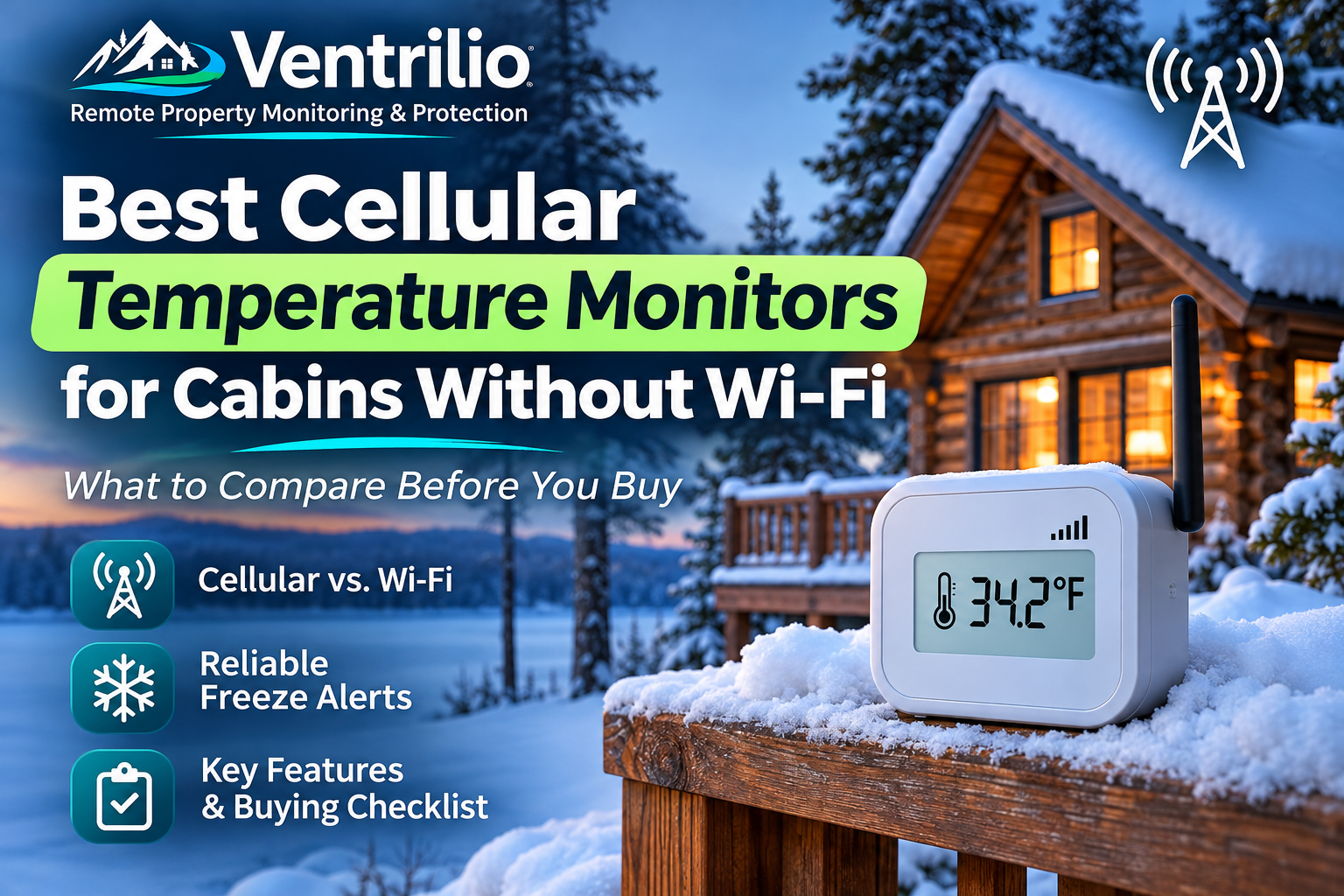
    Best Cellular Temperature Monitors for Cabins Without Wi-Fi: What to Compare

    Looking for the best cellular temperature monitor for a cabin without Wi-Fi? Start by comparing the monitoring setup, not just product names. This guide explains cellular devices, hotspot-based alternatives, coverage, outage behavior, and the ongoing costs that matter when a property sits empty.

    Cellular monitor buyer’s decision checklist

    Before choosing a cellular temperature monitor for a remote cabin, confirm the exact device’s supported carrier and signal coverage at the installation spot, minimum operating temperature, alert delivery method, battery or backup-power behavior, and monthly or annual service charges. Ask whether the system reports loss of connectivity, not only low temperature, and whether a trusted caretaker can receive alerts too. A cellular device is not a substitute for someone who can respond when an alert arrives.

    For a side-by-side evaluation framework, use our Temp Stick and MarCELL comparison; for winter installation, consult the temperature sensor placement guide.

    Who actually needs a cellular temperature monitor?

    A cellular monitor is most useful when a cabin, vacation home, or outbuilding lacks dependable broadband but has usable mobile-network coverage. It can also appeal to owners who want monitoring that does not depend on a home Wi-Fi router. However, cellular service is not automatically more reliable: signal strength, device power, carrier support, and service-plan status all matter.

    Three setups worth comparing

    The first option is a purpose-built cellular environmental monitor that reports temperature and possibly humidity or power status. A second approach uses a cellular router or hotspot to connect conventional Wi-Fi sensors. A third approach is a local alarm with an on-site contact when there is no reliable mobile signal. These are different systems with different failure points, not interchangeable products.

    Comparison: purpose-built cellular vs hotspot plus Wi-Fi

    A purpose-built cellular device generally requires fewer connected components and may offer monitoring-specific alerts. A hotspot-based system can support multiple Wi-Fi devices, but the hotspot, internet plan, router power, and sensor batteries must all work. Compare the complete setup rather than only the sensor’s sticker price.

    ApproachBest fitMain thing to verify
    Purpose-built cellular monitorOne property needing remote environmental alerts without broadbandCarrier coverage, alert types, plan fees, and backup behavior
    Cellular hotspot + Wi-Fi sensorsSeveral compatible Wi-Fi devices at one propertyHotspot uptime, power backup, data costs, and network complexity
    Local alarm + nearby contactLocations without dependable remote connectivityWho can hear, inspect, and respond to an alarm

    MarCELL: an example of a purpose-built cellular approach

    MarCELL is one manufacturer to research for temperature, humidity, and power monitoring over a cellular connection. Confirm the exact model, current carrier coverage, service-plan fees, power-loss alert behavior, and backup battery specifications directly with the manufacturer. We have not hands-on tested the device and do not assume it is the best choice for every property. See our Temp Stick vs. MarCELL comparison for the Wi-Fi-versus-cellular trade-offs.

    What about Temp Stick?

    The standard Temp Stick is a Wi-Fi-based temperature and humidity monitor rather than a standalone cellular device. It may still be an option at a remote cabin if you install and maintain a working cellular hotspot or router that supplies Wi-Fi. That arrangement adds equipment, power requirements, and potential subscription costs. Read our cellular vs. Wi-Fi guide before deciding.

    The features that matter most

    Prioritize low-temperature alert thresholds, dependable notification delivery, the ability to add another recipient, and a way to tell when the device has stopped reporting. If power outages are a concern, distinguish between a device that detects loss of mains power and one that can continue sending messages after the outage. Verify the manufacturer’s documentation rather than assuming a backup battery guarantees continuous connectivity.

    Coverage comes before the purchase

    Check the device’s supported carrier or network and coverage at the actual property address. Outdoor coverage maps are only a starting point; reception inside a basement or metal-sided cabin can be worse. If possible, test reception at the intended installation location. If the property has no reliable cellular signal, neither a cellular monitor nor a hotspot-based Wi-Fi setup may provide dependable remote alerts.

    Calculate the real three-year cost

    Add the hardware price, activation fees, cellular service or data plan, replacement batteries, accessories, and any costs for a hotspot or backup power. Compare totals over 36 months rather than focusing on a promotional device price. Check whether service can be paused seasonally, whether an annual commitment applies, and what happens to alerts if a subscription lapses.

    Freeze protection needs more than an app

    A low-temperature warning is valuable only when it arrives early enough for someone to act. Identify vulnerable plumbing, choose sensor locations carefully, and arrange a trusted local contact or property manager. Review our temperature sensor placement guide and freeze alarm systems guide for the broader protection plan.

    Buying checklist before checkout

    Confirm: (1) supported cellular coverage at the cabin; (2) alerts for the specific conditions you care about; (3) behavior during an electrical outage; (4) service fees and cancellation terms; (5) sensor operating conditions and placement requirements; (6) whether other people can receive alerts; and (7) who will respond locally. If a vendor cannot clearly answer a critical question, resolve it before ordering.

    Bottom line

    For a cabin without broadband, start by checking whether a purpose-built cellular monitor meets your alert needs and has reliable coverage. Compare it with the total cost and complexity of a cellular hotspot plus Wi-Fi sensors. There is no universal winner: the right system is the one that can detect the relevant problem, deliver the alert, and support a real response plan.

    Editorial note: Ventrilio provides independent research and buying guidance, not claims of hands-on product testing. Manufacturer specifications, prices, and service plans can change. This article currently contains no affiliate tracking links.

    For a broader feature checklist across connectivity types, see our remote temperature monitor buying guide.

  • How to Monitor a Cabin Without Wi-Fi: A Practical Setup Guide

    How to Monitor a Cabin Without Wi-Fi: A Practical Setup Guide

    Learn practical ways to monitor temperature, leaks, and power at a cabin that does not have a permanent Wi-Fi connection.

    Start with the risks, not the gadgets

    For a seasonal cabin, the most consequential risks may be frozen pipes, loss of heat, water leaks, or extended power failures. Make a short list of what you need to know remotely and who can act on an alert. A notification is useful only if someone can respond.

    Option 1: A cellular monitoring device

    A purpose-built cellular temperature or environmental monitor can send readings and alerts without a conventional Wi-Fi router. Before buying, check the exact network coverage at the cabin, subscription pricing, power requirements, and whether the device supports low-temperature, humidity, or power-failure alerts.

    Option 2: A cellular hotspot and Wi-Fi sensors

    A cellular hotspot or router can create local Wi-Fi for compatible sensors. This offers flexibility, but introduces more equipment, a data plan, and another point of failure. Consider how the hotspot, router, and sensors will remain powered during an outage.

    Option 3: Local alarms plus a nearby contact

    Where cellular service is unavailable, a local audible alarm and a trusted neighbor or property manager may be more practical than a remote notification system. Some systems can store measurements locally, but stored data does not provide real-time warning while disconnected.

    Check the site before installation

    Test cellular reception inside the cabin and at the intended mounting position. Confirm the sensor’s operating temperature range and avoid placing it next to a heater, direct sunlight, or a draft that could distort readings. Follow the manufacturer’s mounting instructions.

    Design an alert response plan

    Set sensible thresholds for freezing or overheating, add a second recipient where supported, and test notifications. Decide who will inspect the property, where shutoff valves are located, and what to do if the cabin is inaccessible. Never rely solely on one device for safety-critical protection.

    Budget for the full year

    Include device purchase price, service plan, batteries, cellular data if using a hotspot, and occasional onsite maintenance. A less expensive device can cost more over several years if its connectivity requirements are substantial.

    Bottom line

    For a cabin without Wi-Fi, a cellular monitor is often the simplest starting point when coverage is reliable. If coverage is weak, prioritize local safeguards and an in-person response arrangement before investing in connected devices.

    Editorial note: Device features, network support, and pricing vary by model and can change. Verify specifications with the manufacturer before purchasing.

    Which setup fits your cabin?

    Property situationPractical starting pointMain limitation
    No Wi-Fi, usable cellular signalDedicated cellular monitorCarrier coverage and recurring service
    Several smart devices neededCellular router with compatible Wi-Fi sensorsMore equipment and backup-power needs
    No reliable cellular serviceLocal alarm plus a nearby responderNo dependable remote notification
    Existing reliable Wi-FiWi-Fi sensor with tested alertsRouter or internet outages can interrupt alerts

    For more detail on the connectivity trade-offs, see our cellular versus Wi-Fi temperature monitor comparison. If you’re ready to compare specifications, use the remote temperature monitor buying guide.

    Continue reading

    A simple installation checklist

    Before leaving the cabin unattended, trigger a test alert, confirm that the intended contacts receive it, and verify how long the sensor operates without mains power. Record the device location, service renewal date, and a local responder’s contact details. Repeat the test after changing routers, batteries, or cellular service.

    For cold-weather protection, our cabin freeze alarm guide explains Wi-Fi and cellular options, low-temperature alerts, and how to test them.

    Ready to compare equipment? Our cellular temperature monitor buying guide for cabins covers coverage, recurring fees, and outage limitations. Then check where to position sensors for useful freeze warnings.

    For visual monitoring of doors and driveways, see our security camera guide for remote cabins, including cellular and solar-powered setups.

    Also monitoring for water leaks? Our guide to leak detectors for vacant homes compares Wi-Fi and cellular alert requirements alongside sensor and shutoff options.

  • Cellular vs. Wi-Fi Temperature Monitors: Which Is Better for a Remote Property?

    Cellular vs. Wi-Fi Temperature Monitors: Which Is Better for a Remote Property?

    Compare cellular and Wi-Fi temperature monitors for cabins, vacation homes, and other properties you cannot check every day.

    Why connectivity is the first decision

    A remote temperature monitor is only useful when it can report a problem. Before comparing sensor accuracy or app features, identify how the device will reach you when nobody is at the property. A Wi-Fi monitor generally depends on the local router, broadband connection, and electricity. A cellular monitor uses a mobile network, but requires usable coverage and often a paid service plan.

    When Wi-Fi makes sense

    Wi-Fi monitors are often economical when a property has reliable broadband, a well-positioned router, and an owner who can troubleshoot outages. They may be well suited to an occupied home or a vacation property with dependable internet. Check whether the monitor sends alerts through the manufacturer’s cloud service and what happens when the router loses power.

    When cellular makes sense

    Cellular monitoring can be a stronger fit for cabins without fixed internet, vacant rentals, or properties where maintaining a router is impractical. It does not automatically guarantee reliability: cellular coverage varies by carrier and location, and a weak signal inside a metal building or basement can interfere with alerts.

    Power outages and battery backup

    A backup battery matters for both connection types. A battery-powered Wi-Fi sensor cannot deliver a notification if its router and modem are offline. A cellular unit with an appropriate backup battery may continue reporting during a local power outage, provided the cellular network remains available. Check battery runtime, alert frequency, and whether the device reports loss of external power.

    Costs to compare

    Compare upfront hardware cost, any monthly or annual cellular subscription, replacement batteries, and the cost of internet service if the property does not already have it. Do not assume cellular service is included indefinitely. Confirm coverage, plan terms, and cancellation conditions before purchasing.

    A practical checklist

    Before buying, verify: (1) the available internet and cellular signal at the installation point; (2) temperature and humidity ranges; (3) low-temperature and high-temperature alert thresholds; (4) power-loss alerts and backup runtime; (5) how alerts are delivered; (6) recurring costs; and (7) whether multiple people can receive alerts.

    Bottom line

    Choose Wi-Fi if the connection is stable and already maintained. Consider cellular when independent connectivity is more important than the lowest upfront price. Neither replaces periodic property inspections or an appropriate response plan.

    Editorial note: Device features, network support, and pricing vary by model and can change. Verify specifications with the manufacturer before purchasing.

    Cellular vs. Wi-Fi at a glance

    QuestionWi-Fi monitorCellular monitor
    Needs existing internet?Usually yesNo fixed broadband required
    Ongoing expenseMay use existing broadbandOften requires cellular service
    During a local power outageRouter and modem may go offlineMay continue with device backup power
    Biggest reliability checkRouter, internet, and powerCarrier coverage and backup runtime

    Compare specific products in our Temp Stick vs. MarCELL guide, or use the buying checklist to evaluate other models.

    Continue reading

    Before choosing a connection

    At the property, check the Wi-Fi signal where the sensor will sit and whether the router remains powered during an outage. For cellular monitoring, check carrier coverage at the exact building, not just the ZIP code. Compare the full three-year costโ€”including any required planโ€”and arrange for someone local to respond to alerts.

    If freezing pipes are a concern, compare the alert and connectivity trade-offs in our freeze alarm guide for cabins and vacation homes.

    For a cabin without broadband, use our cellular monitor buying checklist to compare the practical options. Whichever connection you choose, correct sensor placement is important for meaningful alerts.